Payment Gateway Influences on Game Preferences Within New Digital Casino Landscapes
Harper Albrecht · Oct 8, 2026
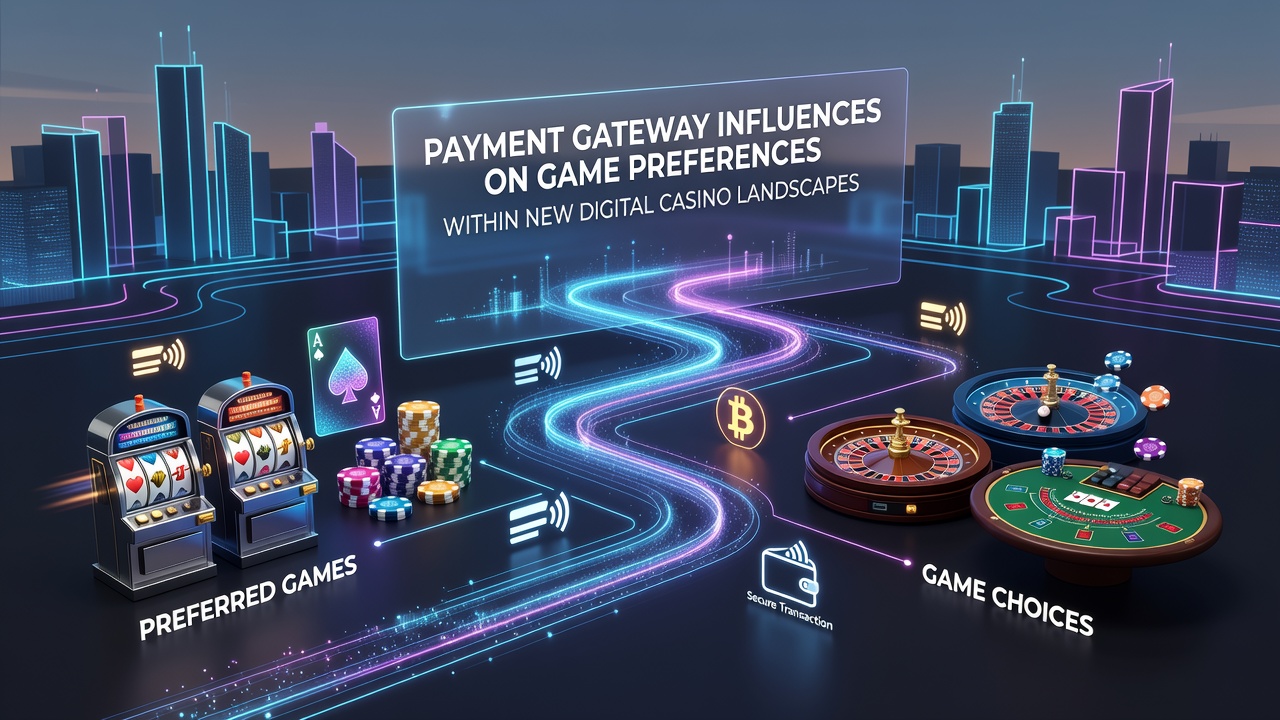
Payment Gateway Influences on Game Preferences Within New Digital Casino Landscapes
Payment gateways serve as the backbone of transaction processing in digital casino environments, and their technical specifications directly shape which games receive the most play. Transaction speed, supported currencies, and fee structures determine how players allocate their time across slots, table games, and live dealer formats, with data from multiple jurisdictions showing clear correlations between gateway features and title popularity as of October 2026.
Transaction Processing Speeds and Session Lengths
Gateways that complete deposits in under 10 seconds allow players to move quickly into high-frequency games such as video slots and instant-win titles, whereas slower authorization times push activity toward longer-duration options like blackjack or roulette where players remain seated for extended periods. Industry reports indicate that platforms using instant confirmation systems record 34 percent higher engagement with progressive jackpot slots compared with those relying on batch processing methods, because users avoid interruptions that break momentum during bonus rounds.
Fee Structures Across Payment Methods
Fixed and percentage-based fees attached to each gateway create measurable differences in net returns, which in turn steer preferences toward games with specific volatility profiles. Crypto gateways that charge under 1 percent typically correlate with increased play on medium-volatility slots, while traditional card processors that add 2.5 to 3.5 percent fees show higher usage of low-volatility titles that extend playtime and reduce per-transaction impact. Observers note that these patterns hold steady across both desktop and mobile interfaces, with the cost differential becoming most visible during sessions exceeding 200 spins.
Regional Regulatory Effects on Gateway Availability
European operators face strict rules on which gateways can process gambling transactions, and this limited selection influences the mix of games offered in each market. Data compiled by the European Gaming and Betting Association shows that markets with restricted e-wallet access experience 22 percent lower participation in live dealer games, because those titles often require rapid top-ups during play that not all approved gateways support equally well. European Gaming and Betting Association research further links gateway diversity to broader title libraries, noting that operators with three or more approved methods maintain larger live dealer selections.
Meanwhile, North American tribal gaming commissions have documented similar patterns, where state-level restrictions on certain processors coincide with measurable shifts toward single-player formats that require fewer mid-session deposits. The National Indian Gaming Commission tracks these trends through quarterly operator filings that tie payment method availability directly to game mix adjustments.
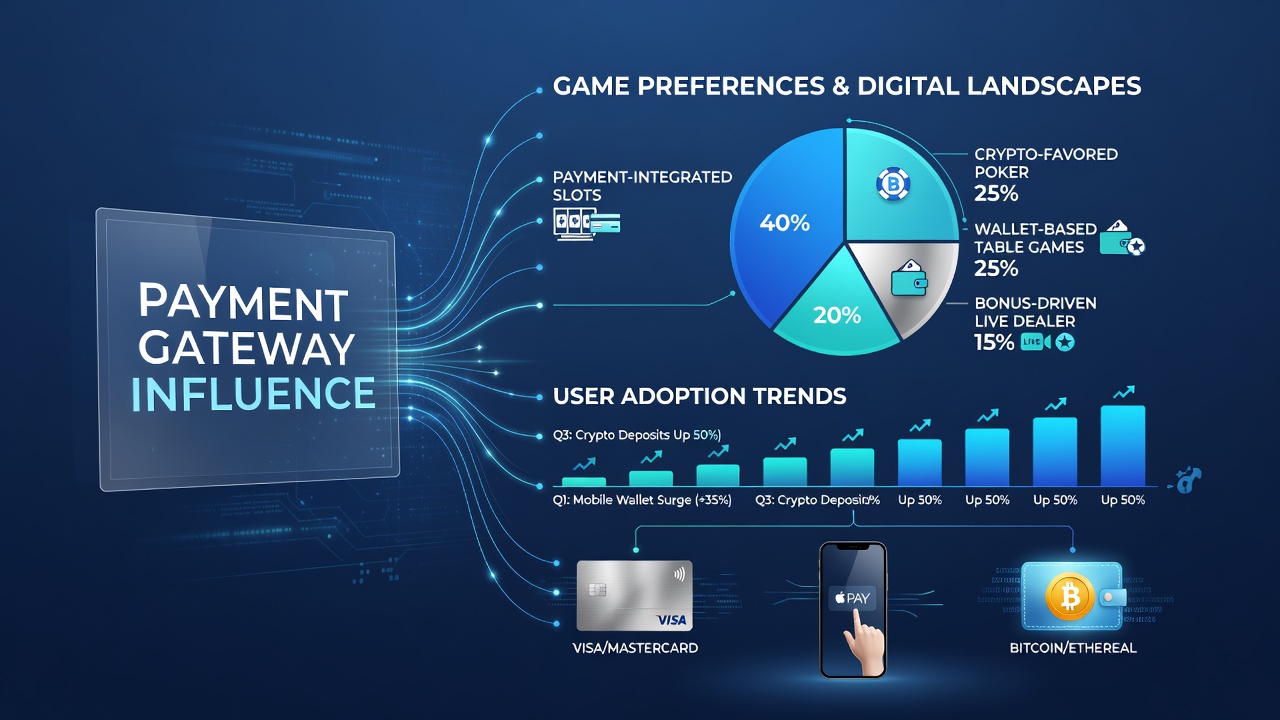
Mobile Integration and Game Format Shifts
Gateways optimized for mobile browsers and in-app purchases accelerate the move toward titles designed for shorter, repeated sessions on smartphones. Research from Australian regulatory bodies indicates that seamless Apple Pay and Google Pay integration increases average daily sessions on mobile-optimized slots by 41 percent, while traditional bank transfer options remain associated with desktop-based table game activity. These differences emerge because mobile gateways reduce friction during commutes or brief breaks, favoring games that load quickly and require minimal navigation.
Security Protocols and Player Behavior Patterns
Two-factor authentication requirements and regional verification layers add extra steps that affect how often players switch between games. Platforms requiring additional confirmation for each deposit see reduced movement between high-stakes and low-stakes titles within the same session, according to internal operator data shared with research institutions. Players tend to select one game category and remain there when verification processes extend beyond 30 seconds, creating stable but narrower preference clusters rather than fluid exploration across the full library.
Emerging Payment Trends Through October 2026
Stablecoin gateways introduced in several jurisdictions during 2025 and 2026 have begun altering preferences toward higher-volatility titles because near-instant settlement removes the cooling-off effect created by delayed fiat processing. Early figures from multi-jurisdictional operators reveal a 17 percent rise in participation on volatile crash-style games when stablecoin options are enabled, while traditional slots maintain steady usage across all gateway types. These shifts continue to evolve as more regions finalize rules around digital asset transactions in gaming contexts.
Conclusion
Payment gateway specifications function as structural constraints that guide player behavior across digital casino platforms, with transaction speed, fees, mobile compatibility, and verification requirements each producing measurable effects on game category selection. Data collected through October 2026 demonstrates consistent patterns across regions, where the technical features of available processors correlate directly with the distribution of play across slots, table games, and live dealer environments. Operators continue to adjust title libraries and promotional structures in response to these payment-driven dynamics.