Demographic Shifts Driving Preference Variations in Mobile Interface Designs for Regulated Gaming Platforms
Harper Albrecht · Aug 19, 2026
Demographic Shifts Driving Preference Variations in Mobile Interface Designs for Regulated Gaming Platforms
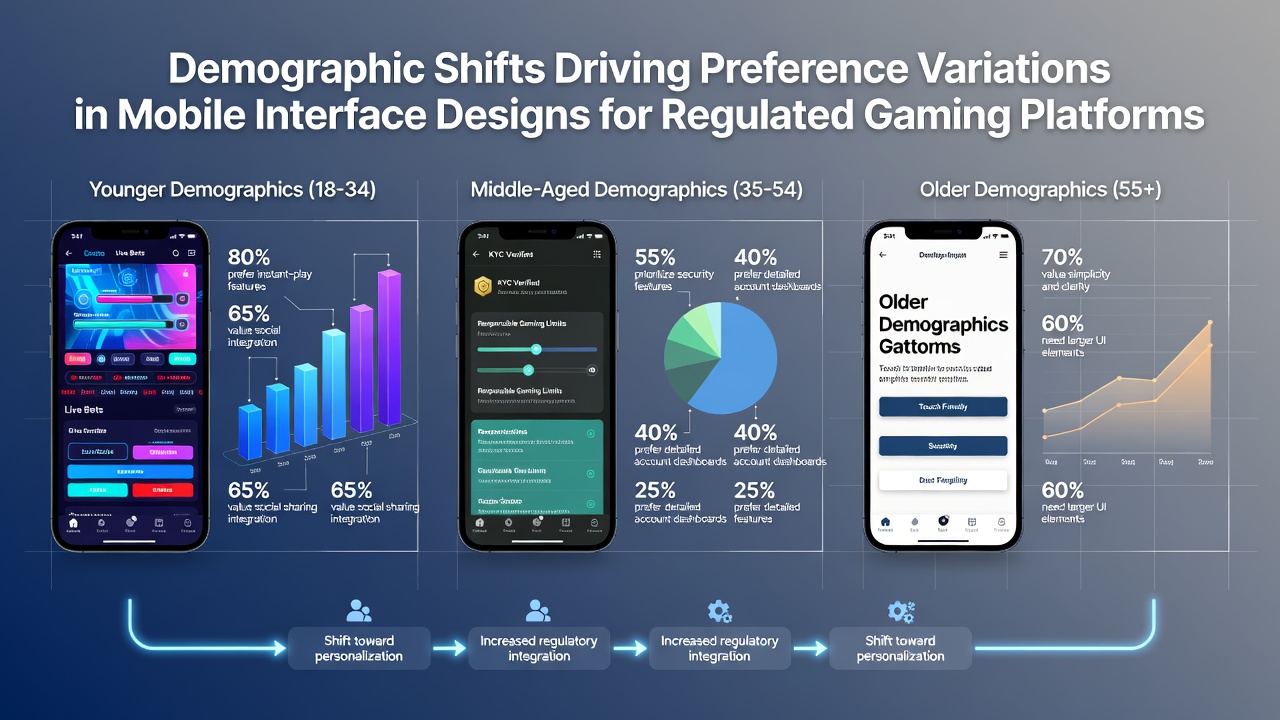
Demographic changes across player populations continue to reshape mobile interface requirements for regulated gaming platforms as operators adjust layouts, navigation flows, and visual elements to match evolving user groups. Data from multiple jurisdictions indicate that age distributions, geographic origins, and cultural backgrounds correlate with distinct interaction patterns on smartphones and tablets used for compliant betting and casino activities. Researchers tracking these trends note that younger cohorts often favor rapid swipe-based controls and dark-mode aesthetics while older segments demonstrate stronger engagement with larger touch targets and simplified menu structures.
Age-Based Interface Adjustments
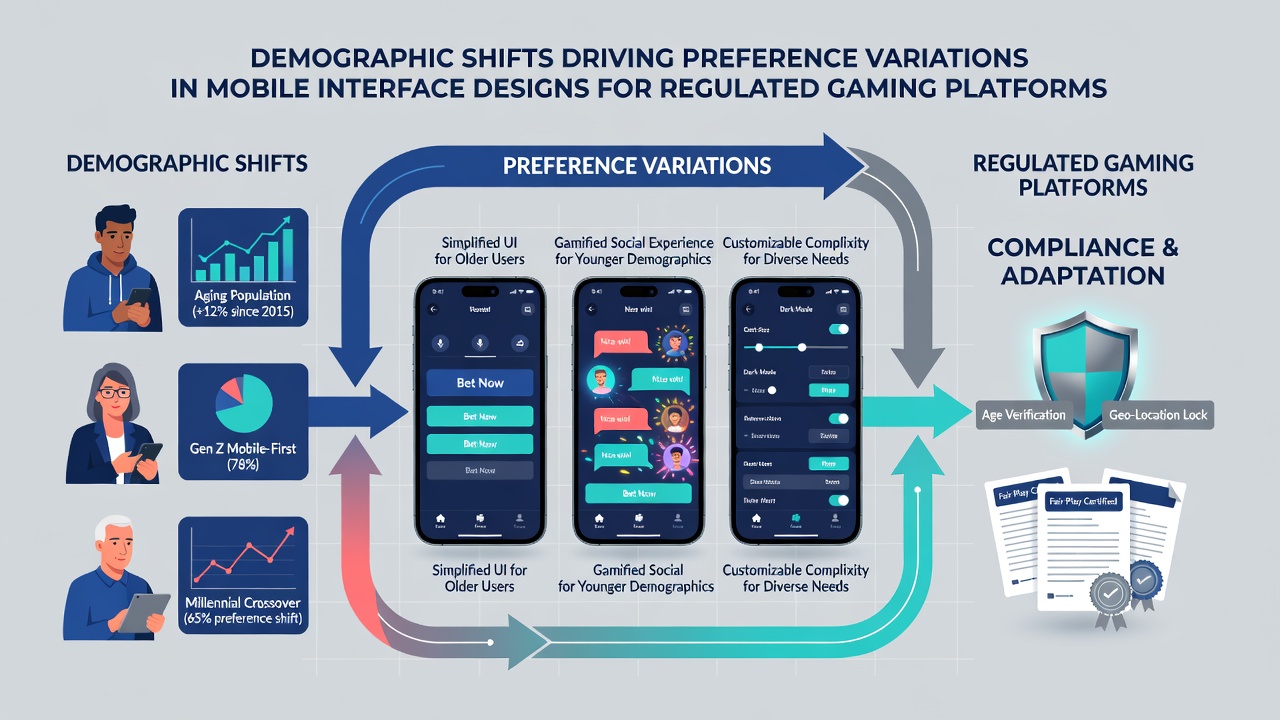
Studies compiled by academic institutions reveal that players aged 18 to 34 show higher interaction rates with animated transitions and personalized recommendation carousels embedded in mobile apps, whereas users over 55 request more static elements and prominent responsible gaming prompts. In August 2026 regulatory filings from several North American states documented increased requests for customizable font sizes and high-contrast modes to accommodate aging player bases entering the market through newly licensed mobile channels. These modifications align with broader accessibility standards that platforms must satisfy before receiving operational approvals.
Regional and Cultural Influences
Geographic factors further complicate design decisions because regulatory frameworks in different territories impose varying constraints on color palettes, promotional visibility, and transaction confirmations. Observers note that platforms serving Asian markets frequently incorporate red accents and numeric-heavy displays to reflect local preferences, while European operations lean toward muted tones and progressive disclosure techniques that minimize regulatory notice fatigue. Reports issued by the Australian Communications and Media Authority highlight how multicultural player pools in that country drive demand for multilingual toggle options directly within game lobbies rather than buried settings menus.
Gender and Behavioral Pattern Data
Analysis of session logs from regulated operators shows measurable differences in navigation habits between male and female demographics, with one group demonstrating longer dwell times on social features and community leaderboards while the other prioritizes quick deposit and withdrawal pathways. These patterns have prompted developers to introduce modular interface components that administrators can activate or suppress based on aggregated user profiles without violating data protection rules. Figures released by the Canadian Gaming Association indicate that platforms implementing such adaptive designs recorded higher retention metrics across mixed-gender cohorts during the first half of 2026.
Regulatory Compliance and Design Constraints
Compliance teams must balance demographic customization against strict requirements for age verification, transaction limits, and self-exclusion tools that appear consistently across all user segments. Regulators in multiple jurisdictions now require audit trails documenting how interface changes affect vulnerable populations, which has led to standardized testing protocols involving diverse focus groups before any update receives final clearance. Those who've examined these processes observe that successful platforms integrate demographic insights during early wireframe stages rather than retrofitting features after launch.
Technological Integration Trends
Advances in device sensors and machine learning allow interfaces to adjust dynamically based on detected user context such as time of day, location, and prior session behavior while remaining within regulatory boundaries. Data from industry research groups indicate that adaptive brightness controls and gesture preferences tied to demographic clusters improve completion rates for deposit flows and game selections. European operators participating in cross-border licensing schemes have begun sharing anonymized preference datasets to accelerate collective understanding of how these shifts manifest across borders.
Future Development Directions
Continued monitoring of census updates and migration patterns provides operators with forward-looking signals about which demographic segments will dominate mobile gaming traffic in coming years. Platforms that maintain flexible design systems report smoother transitions when new regulatory guidance emerges or when player bases expand into previously untapped territories. Collaboration between interface designers, compliance officers, and data analysts has become standard practice at organizations seeking to maintain approvals across multiple jurisdictions simultaneously.
Conclusion
Demographic shifts continue to influence mobile interface evolution on regulated gaming platforms through measurable correlations between user characteristics and preferred interaction styles. Operators responding to these patterns implement targeted adjustments while preserving uniform compliance features required by licensing authorities. Ongoing data collection from diverse sources supports iterative refinements that accommodate both emerging and established player groups without compromising regulatory obligations.